A Mile Underground, My CGM Was Still With Me
And what one of the world's most advanced research facilities taught me about the metabolic data crisis in fitness
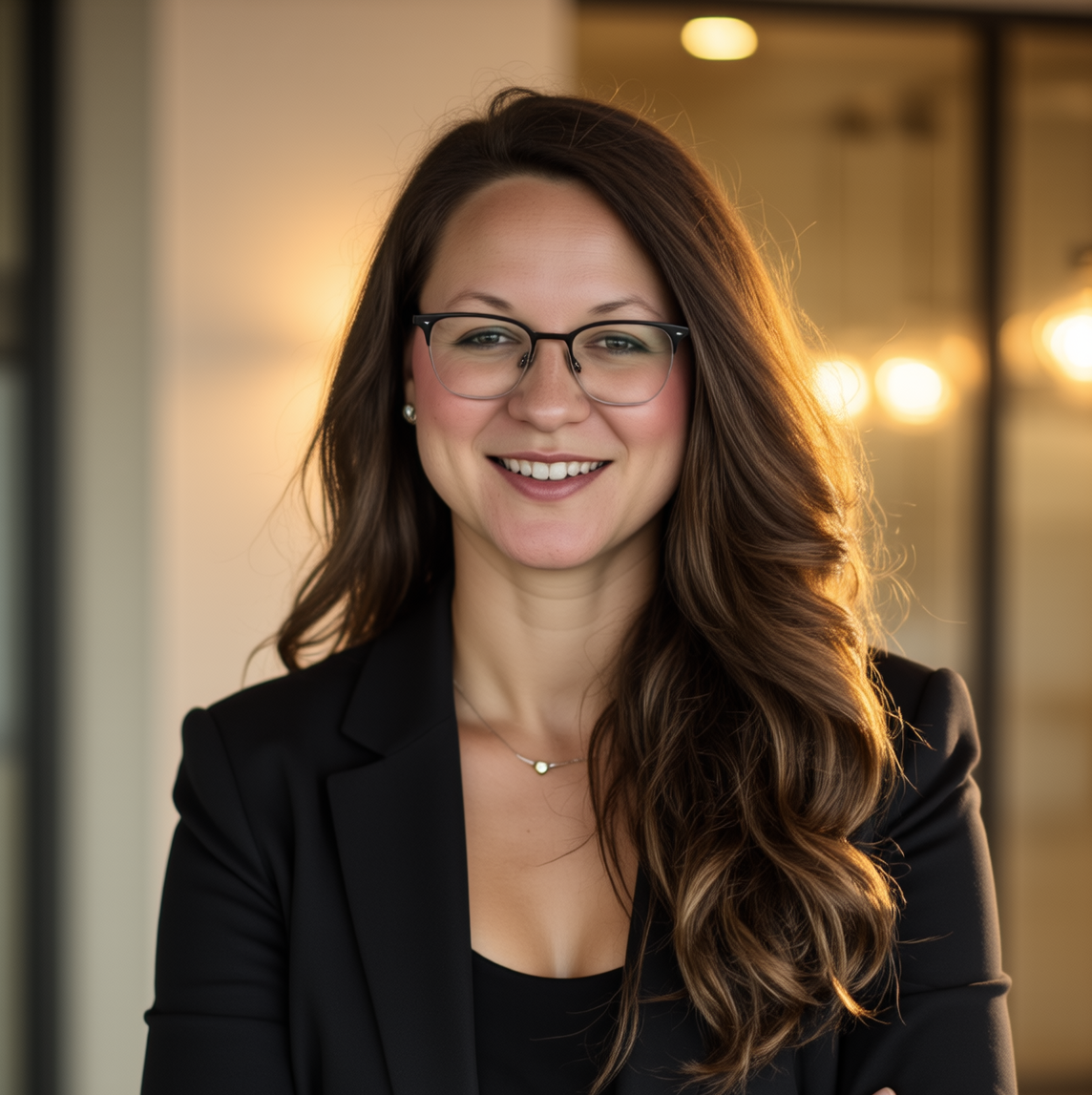
I am believed to be the first person with Type 1 diabetes, wearing both a CGM and an insulin pump, to descend nearly a mile underground into the Sanford Underground Research Facility (SURF) in Lead, South Dakota.
That might sound like a strange thing to lead with.
But stay with me. Because what happened nearly 4,850 feet beneath the Black Hills of South Dakota has everything to do with why I built BioFit, and what I believe is the most urgent, underaddressed problem in the fitness and health coaching industry today.
What Is SURF?
Most people drive through Lead, South Dakota, without knowing that beneath their feet sits one of the most consequential scientific facilities in the world.
The Sanford Underground Research Facility, America's Underground Lab, is the deepest underground laboratory in the United States. It sits 4,850 feet below the surface inside the former Homestake Gold Mine, which was established during the 1876 Black Hills Gold Rush and operated for over 125 years before closing in 2001. In 2006, the mine was transformed into a dedicated underground research facility. Today, with a mission to advance world-class science and inspire learning across generations, SURF hosts 28 active research projects and attracts scientists from around the globe.
Why underground? Because nearly a mile of solid Precambrian rock acts as a natural shield, blocking the constant bombardment of cosmic radiation that saturates the Earth's surfaceEarththe surface, millions of cosmic rays pass through your hand every few months. At the 4850 Level, it's a million times quieter. For experiments designed to detect the faintest signals in the universe, particles so elusive they can pass through the entire Earth without interacting with a single atom, that silence is everything.
The science happening at SURF right now is staggering. The Long-Baseline Neutrino Facility (LBNF), currently under construction, will house the Deep Underground Neutrino Experiment (DUNE), the largest physics experiment ever built in the United States. Built and operated by over 1,000 scientists and engineers from 31 countries, DUNE will study neutrinos as they travel 800 miles through the Earth from Fermilab in Illinois to detectors buried beneath the Black Hills. Those detectors, four stories high, filled with 70,000 tons of liquid argon cooled to minus 184 degrees Celsius, are designed to catch and study interactions that happen only a handful of times per day. To answer questions like: Why does matter exist? What happened in the first moments after the Big Bang? What are neutrinos actually doing as they move through our universe?
The excavation for those caverns alone removed over 800,000 tons of rock.
And none of that would have been possible without a man named Raymond Davis Jr.
The Nobel Prize-Winning Lesson in Signal Detection
In the mid-1960s, Davis, a chemist from Brookhaven National Laboratory, built a solar neutrino detector at the Homestake Mine. His instrument: a 100,000-gallon tank of perchloroethylene (dry-cleaning fluid), buried deep underground, designed to capture and count individual argon atoms produced when a solar neutrino interacted with the chlorine in the fluid.
The problem he was trying to solve was as old as modern physics: we knew the sun produced neutrinos, but could we detect them? Could we count them directly? And would the count match what our models predicted?
Davis ran his experiment for nearly 30 years. He found that only about a third of the expected neutrinos were detected. For years, the discrepancy was called the "solar neutrino problem," and many dismissed his results. It took decades, and the confirming work of two other massive experiments (the Sudbury Neutrino Observatory in Canada and Super-Kamiokande in Japan), to vindicate Davis completely. His work ultimately led to the discovery that neutrinos oscillate between different states, a fundamental revision to our understanding of particle physics. In 2002, Raymond Davis Jr. was awarded the Nobel Prize in Physics.
He detected a signal that almost no one believed existed. He detected it by going underground, eliminating the noise, and building a system precise enough to count individual atoms.
I stood in the cavern where his detector once lived, and I thought: this is exactly what I've been trying to do with glucose data.
What NASA Taught Me About Noise
Before I founded BioFit, I spent years working as an Operations Controller at NASA's Marshall Space Flight Center, monitoring critical payload systems for the International Space Station.
The ISS generates a constant, extraordinary volume of data. Temperatures, pressures, power draws, experiment readings, streams of information flowing in from every system, every payload, every rack of equipment aboard the station. My job was not to collect that data. The systems did that. My job was to watch it, understand it, identify the patterns that mattered, and act on anomalies before they became failures.
I pulled data from every position in the room. I monitored telemetry across dozens of experiments simultaneously. I developed workarounds when systems behaved unexpectedly. And I learned, very quickly, that the most dangerous thing in a high-stakes data environment isn't bad data.
It's uninterpreted data.
A number on a screen means nothing if you don't know its baseline, its trend, its context, and what it's supposed to mean for the system it's measuring. Even a "normal" reading can be an early warning sign if you know how to read it. Even an "abnormal" reading can be benign if you understand the pattern.
SURF confirmed everything I experienced at NASA. Both environments exist for the same reason: to eliminate noise so that the signal can finally speak. The rock shielding at SURF doesn't create better science. It makes the science possible by removing everything that would otherwise drown out the faint signal the experiment is designed to detect.
The cosmic ray would register as a false positive. The background radiation that would corrupt a reading. The interference that would make a real event indistinguishable from a random blip.
Go deep enough. Eliminate the noise. And suddenly you can see what was always there.
I've Been Living With This For almost 30 Years.
I was diagnosed with Type 1 diabetes as a child. I have worn a continuous glucose monitor for over 20 years, longer than most people in the CGM industry have been thinking about CGM coaching.
My CGM has never come off.
It went to NASA with me. It came home to the Black Hills with me. And it descended nearly a mile underground with me into one of the most shielded, most precisely monitored research environments on Earth. At that time, I learned something that cannot be reduced to an app notification or a color-coded chart:
A glucose number is not the same thing as glucose insight.
A reading tells you where you are. A pattern tells you what's happening. And a pattern interpreted correctly, in context, with clinical and physiological understanding, tells you what to do about it.
I've navigated almost 30 years of metabolic management not because I have better technology than anyone else (though the technology has improved dramatically), but because I learned to interpret the patterns. To read the signal inside the noise. To understand that a glucose spike after a specific type of workout means something different than a spike after a high-glycemic meal. That a particular curve shape in the evening means something different than the same curve shape at dawn. That my CGM was sending me information about my body that no one around me, not most doctors, and certainly not most coaches, knew how to read.
That gap nearly cost me, repeatedly.
And now it's being handed to millions of people who have no idea what they're looking at.
The Interpretation Crisis in CGM Fitness Coaching
The CGM market is exploding.
With the FDA's 2025 approval of over-the-counter CGMs and major partnerships between companies like Abbott and WHOOP, and Dexcom and Oura, continuous glucose monitoring is moving rapidly into mainstream fitness. Millions of people are wearing sensors. Millions more will join them.
And almost none of them know what they're looking at.
Worse: the coaches and health professionals advising them don't know either, not because they're incompetent, but because no one has trained them. The fitness industry has been handed one of the most powerful real-time metabolic data tools ever created, yet it has no framework for interpreting it.
A glucose number without pattern context is like a neutrino count without a model to interpret it, meaningless at best, dangerously misleading at worst. When Davis counted fewer neutrinos than expected, the world nearly concluded his experiment was wrong. It took decades to understand that the discrepancy was the discovery.
In CGM coaching, the equivalent happens every day. A client sees a blood sugar spike after a workout and panics, or a coach sees a "flat line" and calls it good, without understanding that neither reading, without pattern context, tells the full story.
Data without a pattern is just noise. And the fitness industry is drowning in noise.
What BioFit Does Differently
BioFit was built to close the interpretation gap.
Our Certified BioFit Specialist™ program trains fitness and health coaches in Glucose Pattern Recognition methodologies, the framework I developed over 20 years of personal CGM experience, refined through my background in NASA operations data analysis, and structured for application in real-world coaching environments.
We don't teach coaches to read numbers.
We teach coaches to read patterns and to understand what those patterns mean for training load, recovery, nutrition timing, hormone cycles, stress response, sleep quality, and long-term metabolic health.
It's the difference between a coach who says "your glucose was 140, that seems high" and a coach who says "this post-exercise pattern tells me your glycogen replenishment timing is off, here's how we adjust your protocol."
One of those coaches is guessing. The other is operating with the precision of a scientist who has gone deep enough underground to eliminate the noise.
Why This Moment Matters
Standing in the cavern that once housed Raymond Davis Jr.'s Nobel Prize-winning detector, a 100,000-gallon tank designed to count individual atoms, I felt the weight of what precision actually requires.
Davis didn't set up his experiment on the surface where it was convenient. He went underground because the work demanded it. He built the most sensitive detection system of its era, not because counting argon atoms was easy, but because the question was important enough to do the hard thing.
The question facing the CGM fitness industry right now is just as important.
Millions of people are wearing metabolic monitoring technology that could genuinely transform how humans understand their own bodies. It could change how we train, how we eat, how we recover, how we age. It could give coaches a window into their clients' metabolic reality that no fitness assessment tool has ever provided.
But only if someone teaches them how to read what they're seeing.
Only if we go deep enough to find the signal.
Amanda Davis is the founder and CEO of BioFit, the leading CGM coaching certification program for fitness and health professionals. A former NASA ISS Operations Controller and almost 30-year metabolic and CGM user, she created BioFit's Glucose Pattern Recognition™ methodology to train the next generation of metabolic health coaches. The October 2026 BioFit Certified Specialist cohort is now open for enrollment.
Learn more at trainbiofit.com